

Tell Godiva: End Child Labor
As one of the world's leading brands of luxury chocolates, Godiva needs to take action to get child labor out of cocoa.
As one of the world's leading brands of luxury chocolates, Godiva needs to take action to get child labor out of cocoa.
This is a former Green America campaign, and progress was made! Thanks to the pressure of nearly 40,000 action takers Godiva has issued a public policy on responsible cocoa.
Within this policy, Godiva commits to taking steps to scale child labor monitoring and remediation systems to 100%, commits to working with suppliers so that cocoa farmers earn a living income, and to no deforestation, among other commitments.
Godiva’s golden boxes of chocolates and decadent chocolate-covered strawberries contain some unsavory ingredients: poverty and child labor.
Nearly 70% of the world’s cocoa, including Godiva’s, is sourced from Ghana and Côte d’Ivoire, where cocoa farmers and their families live on less than $1 per day—well below the global poverty line of $1.25/day.
Child labor, a symptom of extreme poverty, has been a known problem in West African cocoa fields for more than a decade. The US Department of Labor found more than 2 million children work in hazardous conditions growing cocoa—such as burning fields, applying agrochemicals, carrying heavy loads—and many do not attend school.
Thanks to pressure from Green America members, Godiva has been exploring what sustainability means to the company and what a policy might look like. While we applaud Godiva for taking an interest in sustainability, there is no need to reinvent the wheel. Many fair trade chocolate companies have sourced directly from cocoa farmers for years, ensuring fair payments, safe working conditions, and no child labor.

Outdated federal rules force the printing and mailing of billions of sheets of paper every year. A new proposal from the Department of Labor can change that. Sign our petition!

With your help, Green America is pushing Artificial Intelligence (AI) companies like Meta (Facebook/Instagram) to use renewable energy so communities aren’t polluted and climate change isn’t made worse by fossil fuels they are using.

A newly approved GMO wheat is engineered to withstand a herbicide linked to reproductive harm and birth defects. Tell food companies to reject it before it enters our food supply.

Companies like Costco and LL Bean say they care about sustainability – they need to issue their branded credit cards through a bank that does not finance fossil fuel expansion.
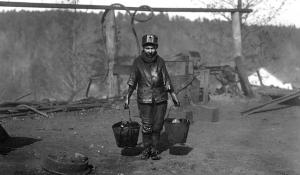
When deciding on what to make for dinner—maybe grilling burgers or making chicken with a side of veggies—many of us think about how to balance making something affordable, delicious, and healthy. We’re less likely to consider whether child labor…

Don’t think child labor in the US is a thing of the past. In 2022, the US Department of Labor (DOL) discovered over 100 children, aged 13-17, employed in dangerous jobs at meatpacking plants across the country by Packers Sanitation Services…

The 2025 Chocolate Scorecard highlights how international brands, big and small, perform when it comes to important issues like farmer income, child labor, deforestation, and pesticide usage. Smaller brands that have a mission of creating…

©2024 Green America

Green America's website is sponsored by Green America members and